Best Practices for Nitrogen Management in Forage
Forages are one of the largest crops, by acreage (millions) and yield (tons per acre) alike in many areas of North America. In 2022, U.S. growers in 17 major forage-growing states farmed almost 80 million total acres of alfalfa, silage, greenchop and other hay, which produced over 66 million tons of harvestable materials. That is a lot of forage!
Forages are well-known for their high yields (commonly expressed as short tons per acre), which means that forage crops have a considerable demand for nutrients. High-yielding forage production can deplete the nutrient reserves in your soil if they are not replaced in a nutrient management program. For example, without fertilizer, very few soils can supply the nitrogen necessary to meet a forage crop’s full nutrient demand and, if uncorrected, yield and quality goals may be missed.
Understanding the nutrient requirements of these crops will allow you to effectively manage them and produce higher-quality yields (e.g., more protein per ton). To begin, let’s get into the details of managing nitrogen in your forage crops.
Nitrogen requirements – grass forage
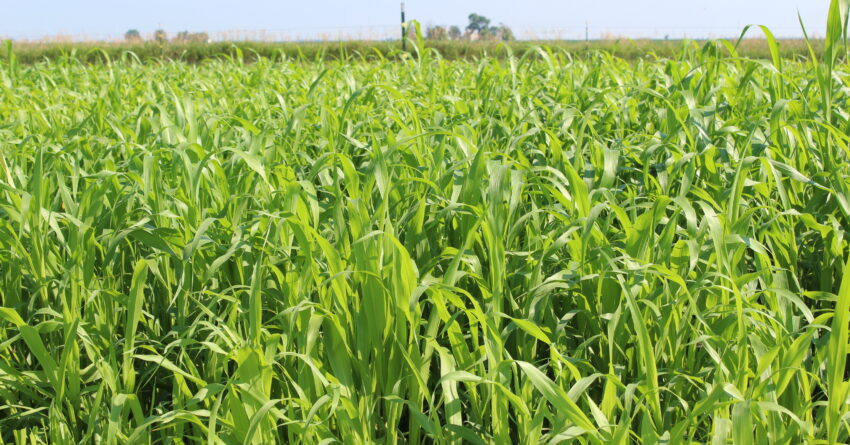
A lack of nitrogen in grass forage types (e.g., silage corn, sorghum, sudangrass forage) can lead to lower yields, decreased forage protein levels and reduced bioenergy in these nutrient-demanding crops. As mineralization slowly releases nitrogen from our soil throughout the growing season, we are left with only a fraction of the total nitrogen our grass forage requires.
The nitrogen demands for grass forage types range from 40 to 200 pounds per acre depending on the forage variety, yield potential and growing areas. For example, 1 ton per acre of high-quality silage corn will need to acquire over 10 pounds of nitrogen per acre during the growing season. If we apply that value to a high yield of 30 tons per acre, we can see that a grower is responsible for supplying 291 total pounds of nitrogen per acre during the growing season from manure, fertilizer and soil sources. Applying the optimal rate of nitrogen annually will help growers optimize yields, maintain productivity and increase protein levels based on their unique farming situation.

Fertilizers can supply grass forage crops with the nitrogen they need to thrive. As nitrogen is rarely stored in the crop or soil in large quantities for future growing seasons, the annual application of nitrogen is extremely important for grass forage production.
Nitrogen requirements – legume
Nitrogen is also required for the growth and development of legumes (e.g., alfalfa). They require two to three times more nitrogen than grass forage crops; however, most of the nitrogen supply can be provided through the fixing of atmospheric nitrogen. The addition of specialized bacteria (Bradyrhizobia or Rhizobia spp.) allows atmospheric nitrogen to be captured and changed into a form the crop can use. This process, known as nitrogen fixation, can supply 50% to over 100% of the nitrogen needed for legume growth, depending on the crop type, the length of the growing season and total yield potential.
Quick Tip: To check if nitrogen is being fixed in your legumes, carefully dig up the roots and shake away the soil to expose the nodules of the plant. Gently cut open the nodule. If the inner color is a deep red or pink, that means it is fixing nitrogen.
The addition of nitrogen fertilizer may be needed in crops that are no longer fixing their own nitrogen or have poorly developed nodules. There are many causes of poor or nonexistent nodulation, including an absence of a nitrogen-fixing forage in previous rotations; excess nitrates from recent manure or fertilizer applications; a lack of other soil nutrients such as phosphate, potassium, calcium, iron and molybdenum; poorly performing or mismatched inoculant product; and more. Adding nitrogen in these cases can help you meet yield goals while the nitrogen-fixing relationship is undergoing correction. Moreover, if good nodulation is expected in a new crop, the addition of nitrogen can support plant growth and nourish your crops for the first few weeks after planting until nitrogen fixation can adequately supply your crops with the nitrogen they need. It can also be applied to stands in the last years of production to push for a few more years of reasonable growth and yield.
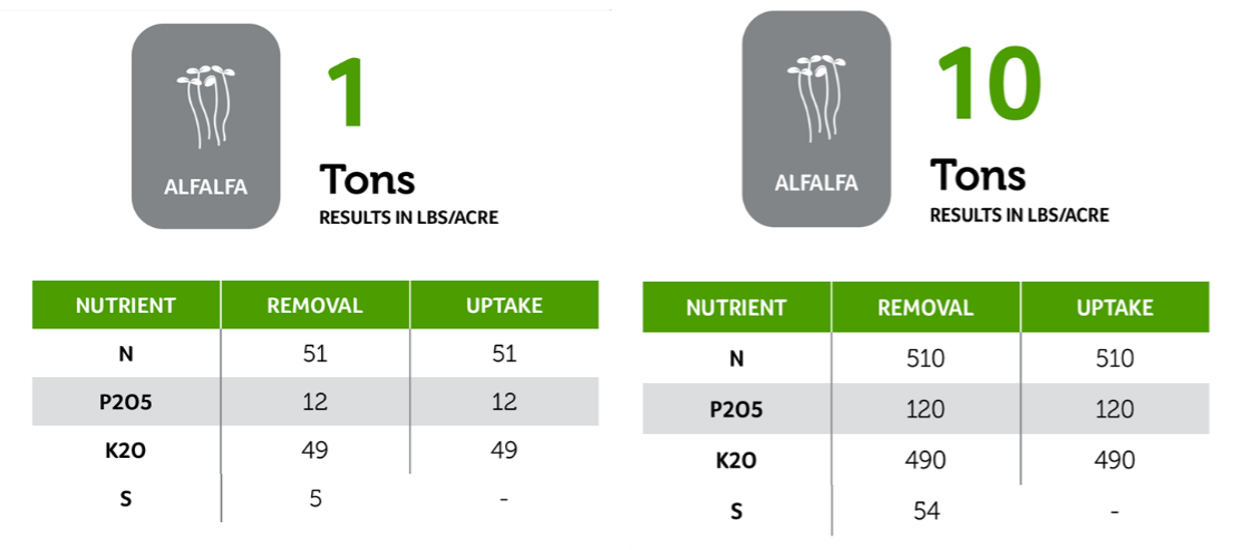
To get an understanding of the nitrogen demand from alfalfa, a common legume forage, let’s consider the total seasonal demand of the crop. For example, 1 ton per acre of high-quality alfalfa will need to acquire over 51 pounds of nitrogen per acre during the growing season – from the soil, applied fertilizer and nitrogen fixation. If we apply that value to a high yield of 10 tons per acre, we can see that a grower is responsible for supplying 510 total pounds of nitrogen per acre during the growing season from manure, fertilizer and soil sources to grow an alfalfa crop. That is a lot of nitrogen! Doubling-checking nodulation and getting an honest estimate of the nitrogen (pounds/acre) contribution from this pathway can help fine tune nitrogen management programs.
Nitrogen requirements – grass forage & legume
In mixed forage stands, nitrogen requirements can vary. While legumes can meet their own high demand for nitrogen through fixation, grass forages cannot. They rely on nitrogen supplied through the soil, legumes and the application of fertilizer.
However, the addition of nitrogen fertilizer can sometimes stimulate grass forage growth to the point in which it begins to outperform the legumes. This can reduce forage quality and shade out the legume portion of the mix, which can reduce yield from the legume component. Thus, nitrogen recommendations for mixed forage crops are based on the composition of your stand. The higher the legume component, the lower the nitrogen recommendation. This allows you to maximize production and provide your crops with adequate nutrition.
Application methods & timing
When placing nitrogen directly with your seeds, keep in mind that application rates should not exceed 10 pounds of nitrogen per acre. You can also use equipment that separates the seed and fertilizer to reduce contact during placement (e.g., planting a 2×2 fertilizer band with seed). Broadcasting, topdressing, split application and banding are common application methods for applying nitrogen fertilizer to your forage crops. Each method has its advantages and disadvantages; however, topdressing remains the most popular due to its ease of application and lower cost. The application method you choose should be determined based on your soil type, climate, forage variety, growth stage and management practices.
To learn more about the nitrogen requirements of forage crops, visit our forage nutrient management guide today.
Interested in learning more about how ESN can protect your forage crops deliver the nitrogen they need? Reach out to an ESN rep in your area, today!
References
2022 National Forage Review. Progressive Forage Magazine. 2022-pf-stats-lowres.pdf (progressivepublish.com)
eKonomics. Forage Nutrient Management Guide. Forage Nutrient Management Guide (nutrien-ekonomics.com)
K. Wyant 2024. Fertilizer Planning for Forage Crop Production. Progressive Crop Consultant Magazine. https://issuu.com/myaglife/docs/pcc_jan_feb_2024_e