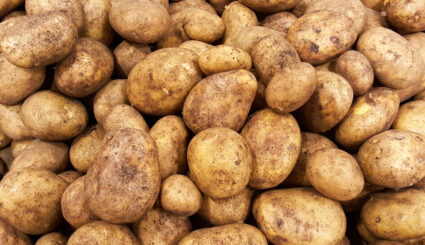
ESN in ‘Russet Burbank’ Potato: Yield and Tuber Quality

Recent research in Idaho identified the effectiveness of ESN as the nitrogen source for potatoes, looking specifically at yield and quality. The study conducted by Trent W. Taysom, Joshua J. LeMonte, Curtis J. Ransom, Jeffrey C. Stark, Austin P. Hopkins and Bryan G. Hopkins found that ESN applied at emergence resulted in US No. 1, marketable and total yield increases and a size shift towards larger tubers compared to uncoated urea.
Read the abstract and access the full study below.
Research summary
Nitrogen fertilizer applied as polymer coated urea (PCU) may have the potential to improve potato production. The objectives of this study were to determine the effects of PCU on potato yield and quality. ‘Russet Burbank’ potato was grown at three Idaho, USA locations. Five rates of N (0, 33, 67, 100, and 133% of the recommended rate) were applied in all combinations of: PCU applied at emergence, urea applied at emergence, or urea split-applied. The PCU-fertilized treatments produced 11%, 11%, and 10% higher US No. 1, marketable and total tuber yields, respectively, than urea-split applied. PCU trended toward increased tuber size. At equivalent rates, PCU was more efficient than urea N in providing N to potato. These results confirm findings from other researchers that a single application of PCU fertilizer, just prior to emergence, can efficiently meet seasonal N requirements for Russet Burbank potato.
Read the full study in the American Journal of Potato Research.
Source:
Taysom, Trent & LeMonte, Joshua & Ransom, Curtis & Stark, Jeffrey & Hopkins, Austin & Hopkins, Bryan. (2023). Polymer Coated Urea in ‘Russet Burbank’ Potato: Yield and Tuber Quality. American Journal of Potato Research. 100. 10.1007/s12230-023-09931-5.