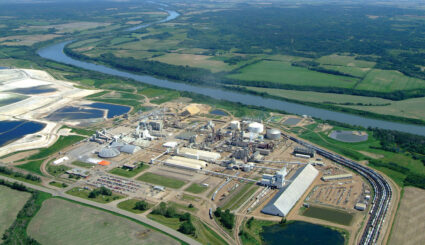
Inside Nitrogen Fertilizer Production
Nitrogen is the most commonly applied nutrient in fertilizers around the world, playing a critical role in plant growth, yield potential and crop quality. While most growers understand how important nitrogen is in their fields, many haven’t seen what it takes to produce and deliver it.
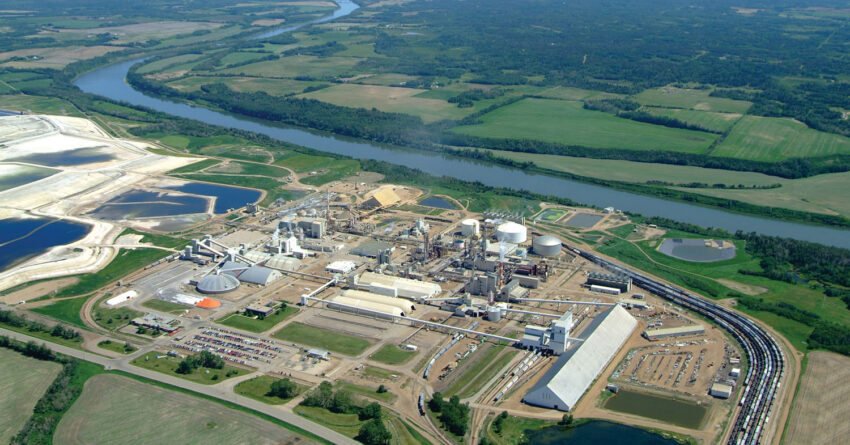
On a recent episode of The Dirt PodKast from eKonomics, Chris Boyda, Senior Manager of Operations at Nutrien’s Redwater nitrogen facility, joined the show to explore how nitrogen fertilizers are manufactured at scale and delivered to farms across Western Canada. From the production of ammonia to the process behind manufacturing urea, UAN and ammonium nitrate, the episode provided a real behind-the-scenes look at nitrogen fertilizer production.
Nitrogen fertilizers produced at Redwater
Nutrien’s Redwater nitrogen facility is one of the largest fertilizer facilities in Canada. The facility manufactures a wide array of nitrogen fertilizer products including ammonia, granular urea, UAN solutions, ammonium nitrate, ammonium sulfate and a newer urea liquor solution.
But how are these products made?
“It all starts with ammonia,” said Boyda. “Ammonia is the key product that all the other products are derivatives of.”
The process of ammonia production
Ammonia (NH₃) is produced using natural gas, steam and air.
Boyda explained that the process begins when natural gas and steam are combined in a primary reformer to produce hydrogen. At the same time, air is introduced into a secondary reformer, where oxygen is consumed, leaving behind nitrogen. The nitrogen and hydrogen are then processed to form ammonia.
Turning ammonia into nitrogen fertilizers
Once ammonia is produced, it can be used on its own as fertilizer or serve as a building block for producing several other nitrogen fertilizer products including urea, UAN and ammonium sulfate.
Producing urea from ammonia
A primary product that is derived from ammonia is urea, one of the most widely used nitrogen fertilizers in the world. After ammonia is made, it’s cooled and stored before the urea production process begins.
There, the liquid ammonia is combined with carbon dioxide (CO₂) in a high-pressure reactor to create an intermediate product called ammonium carbamate. That product then undergoes another reaction to form urea and water.
From there, excess water is removed until the solution is almost purely urea. The urea is then sent to granulators, where it is sprayed onto granules and cooled into a solid urea fertilizer product. It is then thoroughly screened, stored and prepared for distribution to growers.
Producing ammonium nitrate
Ammonium nitrate production also begins with ammonia. First, ammonia is combined with oxygen in a chemical process to produce nitric acid. The nitric acid is then combined with more ammonia to create an ammonium nitrate solution, one of the key ingredients used to produce UAN fertilizer.
Producing UAN solutions
UAN solutions are produced using a portion of the urea and ammonium nitrate produced in the processes above.
Urea melt and ammonium nitrate are combined at a mixing facility, cooled and pumped into storage tanks. The resulting UAN solution has a nitrogen analysis of 28 percent and is stored until delivery.
Producing ammonium sulfate
Ammonium sulfate fertilizer production also begins with ammonia.
First, elemental sulfur is converted into sulfuric acid through a series of chemical reactions. The sulfuric acid is then combined with ammonia to produce ammonium sulfate.
The ammonium sulfate is formed into a slurry solution and sprayed onto granules in a granulator to create desired particle sizes. The granules are then screened before being stored for delivery.
Where it all ends up: delivering nitrogen fertilizers to the farm
Once produced, the nitrogen fertilizers from Nutrien’s Redwater facility are distributed across Western Canada by both truck and train.
According to Boyda, most of the products remain relatively close to where they are produced, helping to efficiently supply growers throughout Alberta, Saskatchewan and Manitoba.
What it takes to make nitrogen fertilizer
While growers only see the finished product, every granule begins its journey long before it reaches the field. From ammonia production and chemical processing to granulation, storage and delivery, it takes a tremendous amount of coordination and oversight to transform raw materials into the nitrogen fertilizers growers rely on every season. Listen to the full episode from The Dirt PodKast to learn more about the process behind nitrogen fertilizer production.
Want to hear more insights like this? Subscribe to The Dirt PodKast today. New episodes are released every Tuesday.