
Testing for Nutrient Availability: The Value of Biological Soil Testing
We have all been there. Nutrients are applied, but crops aren’t performing the …
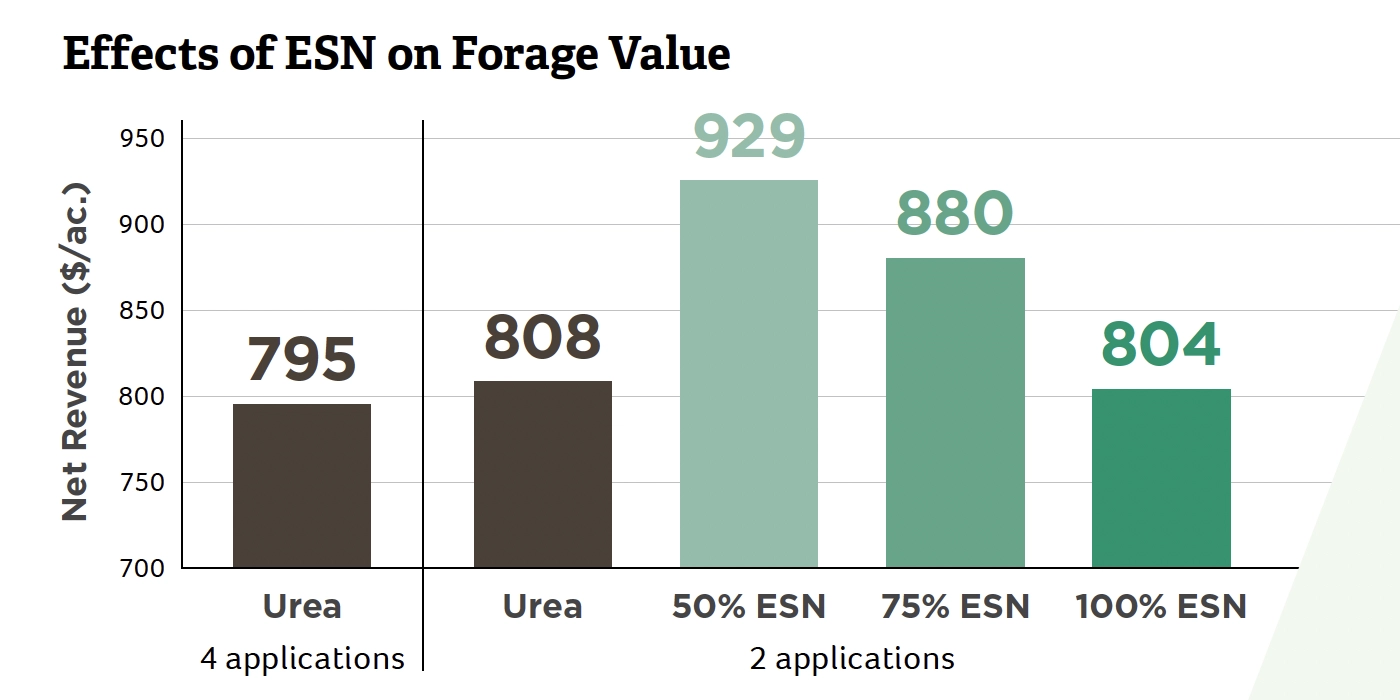
A two year Georgia study demonstrates how ESN can increase revenue in forage production. ESN protects nitrogen (N) from loss inside its unique protective coating and supplies N to the crop when it is needed. The result is increased corn yields and improved N-use efficiency.
Forages need N throughout the growing season. Most N uptake by forages takes place in the period of about 30 days after green-up or hay cutting. ESN may be used to meet this nitrogen demand.
In this Georgia study, ESN applied at green-up followed by a mid-season application increased revenue compared to urea applied at the same timings or in four applications. Revenue was greatest with a 50:50 blend of ESN: urea, and decreased with the addition of higher percentages of ESN. These decreases due to higher percentages of ESN resulted because forages need most of the nitrogen in a relatively short period of time, and the ESN did not have adequate time to release.
| Attachment | Size |
|---|---|
| Effects of ESN on Forage Value | 468.85 kb |
We have all been there. Nutrients are applied, but crops aren’t performing the …

Nitrogen is the most commonly applied nutrient in fertilizers around the world, playing …

Nitrogen (N) is the most important input in crop production systems around the …