

Testing for Nutrient Availability: The Value of Biological Soil Testing
We have all been there. Nutrients are applied, but crops aren’t performing the …
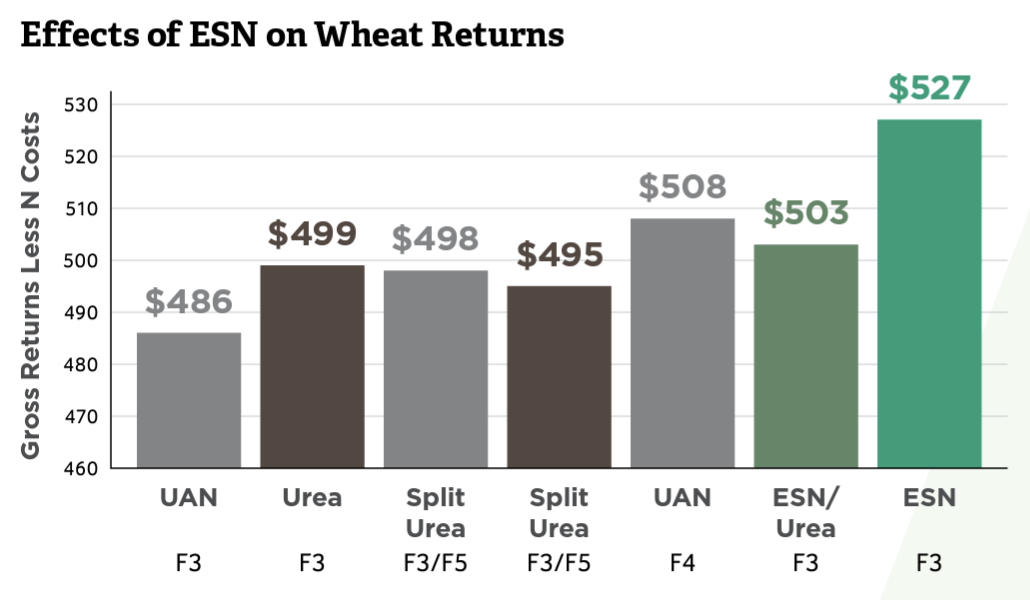
An Indiana study demonstrates how ESN can increase revenue in wheat production. ESN protects nitrogen (N) from loss inside its unique protective coating and supplies N to the crop when it is needed. By supplying N to the crop later in the growing season, more N is available for protein production in the grain.
Wheat plants need N throughout the growing season. Most N uptake by a wheat plant takes place in the period of about 40-80 days after planting and continues up to 120 days after planting. ESN may be used to meet this long season demand.
In this Indiana study, ESN applied at F3 increased revenue compared to all other treatments. When ESN was blended with urea at the same timing, returns were higher than all other treatments with the exception of UAN applied at F4.
| Attachment | Size |
|---|---|
| Effects of ESN on Wheat Returns | 261.26 kb |
We have all been there. Nutrients are applied, but crops aren’t performing the …

Nitrogen is the most commonly applied nutrient in fertilizers around the world, playing …

Nitrogen (N) is the most important input in crop production systems around the …