

Testing for Nutrient Availability: The Value of Biological Soil Testing
We have all been there. Nutrients are applied, but crops aren’t performing the …
A two-year Mississippi study demonstrates how ESN can increase yields in irrigated soybean production. ESN can provide additional nitrogen to soybean plants during flowering and pod set, resulting in higher yields. ESN protects nitrogen (N) from loss inside its unique protective coating and supplies N to the crop when it is needed. The result is increased soybean yields and improved N-use efficiency.
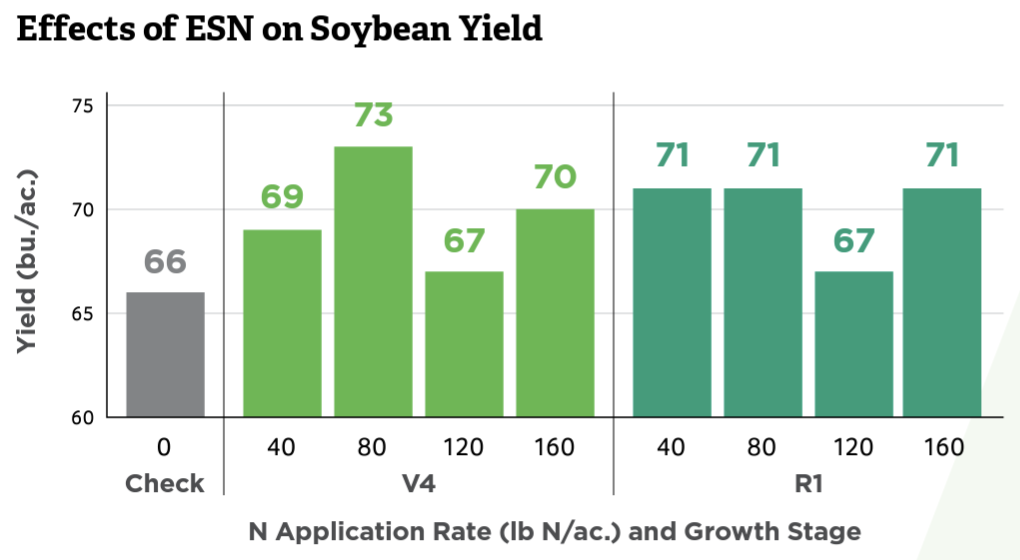
Soybean plants need N throughout the growing season. Most N needed by the plant is produced through nodules on the roots, however, under high yield situations, this may not be sufficient N for optimum yields. By applying ESN just prior to bloom, additional N will be supplied during the peak demand period.
In this two-year Mississippi study, ESN yielded more than untreated plots by an average of four bushels/acre, with the greatest increase generally coming at the 80 lbs N/acre rate.

| Attachment | Size |
|---|---|
| ESN Increases Irrigated Soybean Yields in Two-Year Mississippi Study | 254.53 kb |
| ESN Increases Irrigated Soybean Yields in Mississippi | 254.09 kb |
We have all been there. Nutrients are applied, but crops aren’t performing the …

Nitrogen is the most commonly applied nutrient in fertilizers around the world, playing …

Nitrogen (N) is the most important input in crop production systems around the …