
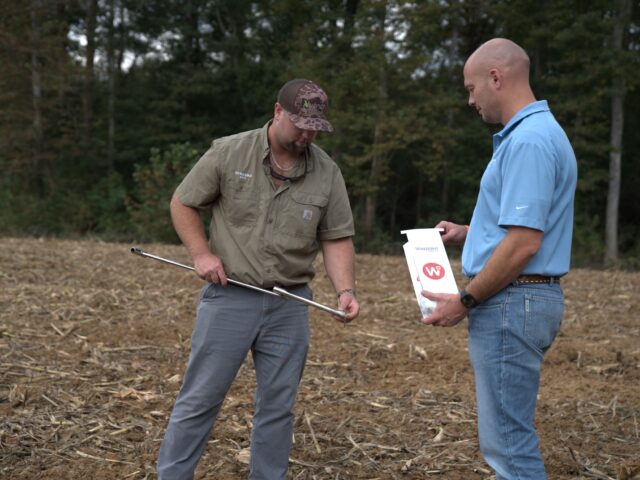
Testing for Nutrient Availability: The Value of Biological Soil Testing
We have all been there. Nutrients are applied, but crops aren’t performing the …
Advantages of ESN demonstrated through the study:
Reduced risk of nitrogen loss
• ESN can be applied when there is no rain in the forecast
• Fact: It didn’t rain for 5 weeks after ESN was applied at planting
• ESN only applied TWICE vs. 4 applications with Urea (after each grazing)
Enhanced forage growth
• ESN provided an EXTRA Grazing
• 6 Grazings with ESN vs. 5 Grazings with Urea with urease inhibitor
• Over 1000 pounds of extra forage per acre
• ESN showed faster regrowth after grazing
***NOTE*** 43 inches of rainfall during this study!

The following study was conducted at LSU-Alexandria and was designed to evaluate ESN as a controlled-release fertilizer source for winter ryegrass, and demonstrates increased winter forage yield through better N-use efficiency.
• Ryegrass planted at 40 lb/A on 9/23/15
• According to soil test results, applied TSP to all plots at planting
• LSU recommends 150-180# N/ac/season
• 75# N (ESN) at planting/remaining 75# on 1/1/16
• Urea and Urea + urease inhibitor was applied after each grazing
• Plots surrounded by electric fencing
• Plots were”flash” grazed using 16 mature cows when ryegrass height reached 8-10″

| Attachment | Size |
|---|---|
| ESN Provides Extra Grazing in Winter Ryegrass | 601.17 kb |
We have all been there. Nutrients are applied, but crops aren’t performing the …

Nitrogen is the most commonly applied nutrient in fertilizers around the world, playing …

Nitrogen (N) is the most important input in crop production systems around the …