
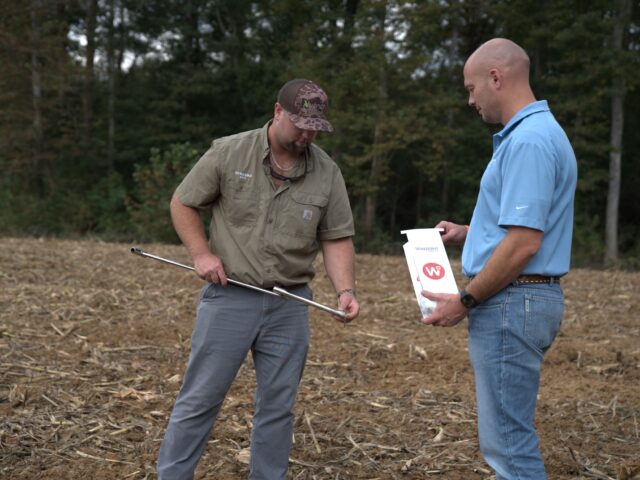
Testing for Nutrient Availability: The Value of Biological Soil Testing
We have all been there. Nutrients are applied, but crops aren’t performing the …
AS/AN treatment is split application with 1/3 of total N applied at emergence as ammonium sulfate and incorporated by hilling cultivation with the remaining 2/3 applied as ammonium nitrate at tuberization and immediately watered in. ESN was all applied in one application at emergence and similarly incorporated by the hilling cultivation. Yield values are marketable yield and are means of two years. Source: Dr. M. Ruark, Univ of Wisconsin, Agron. J v. 106.
Potatoes require careful management of relatively high nitrogen (N) rates. They are a shallow-rooted crop often grown on sandy soils with potential for nitrogen (N) leaching beyond the root zone and into groundwater. ESN has repeatedly been shown to produce greater potato yields with fewer applications, reduce N leaching, and increase profits. In this Wisconsin study, one ESN application produced yields similar to a conventional split application and reduced leaching losses.

| Attachment | Size |
|---|---|
| ESN Simplifies Wisconsin Potato Nitrogen Management | 680.13 kb |
We have all been there. Nutrients are applied, but crops aren’t performing the …

Nitrogen is the most commonly applied nutrient in fertilizers around the world, playing …
Nitrogen (N) is the most important input in crop production systems around the …