Digging Deeper into Your Soil: The Complete Soil Management Toolkit

“A very small investment in soil sampling can save a producer thousands in input costs.” – Jourdan Bell, research and extension agronomist with the Texas A&M AgriLife Extension Service, The Dirt podKast season two.
Investing in practices that can help you enhance soil health and better manage the nutrients you apply can boost profitability, improve nitrogen use efficiency and enhance crop production on your farm. A great place to start is testing your soil, taking a closer look at soil pH and understanding the effects of saline soils. Let’s take a closer look at each option.
Soil Sampling 101
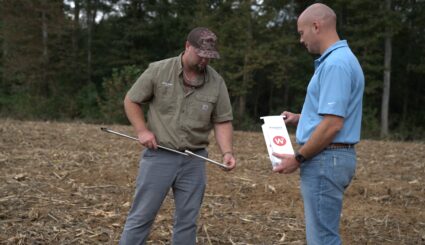
Soil sampling helps you create cost-effective nutrient management plans that offer the greatest return on investment (ROI) by helping you better understand the nutrients in your soil. Soil testing will equip you with actionable insights you can use to make more strategic decisions around fertilizer management, nutrient management and soil health. It will give you the opportunity to learn more about the amount of nutrients that are available to your plants and how these levels change over time to help you maintain nutrient availability. But how can you ensure you are getting the best sample? What does a basic soil test tell you, and how deep should your sample go? Dig into the soil sampling toolkit created by eKonomics to take a closer look at the ins and outs of soil sampling to ensure your best sample yet:

Soil pH 101
Soil pH has a profound impact on nutrient management, soil productivity and the biological processes that occur in soil. High or low soil pH levels will drastically impact phosphorus availability, micronutrient availability and nutrient uptake and affect your overall nutrient management plan. When soil pH is optimized, nutrient availability, soil quality and productivity are all improved. Monitoring this chemical property with regular soil testing can help optimize fertilizer use efficiency and nutrient management.
Explore optimum soil pH levels for a variety of crops, common causes of soil acidity and approaches to managing and balancing soil pH—including liming and nitrogen management—in the following eKonomics toolkit:

Soil Salinity 101
A variety of water-soluble salts are commonly present in our soils. But when excess levels accumulate, soil salinization occurs, and they can become harmful to crops. Soil salinity can negatively impact crop yield, plant growth and water and nutrient uptake. It can also cause drainage problems, short- and long-term salinity stress, ion toxicities and soil degradation.
Fertilizer and nutrient management practices are adjusted in fields experiencing soil salinity. Variable rate fertilizer applications are commonly used to avoid excessive nutrient application, maximize return on investment and reduce the impact that fertilizer has on salinity. Soil testing is one of the most useful ways to identify saline areas of a field. To learn more about the effects of salt-affected soils and how to manage crop production under saline soils, check out the soil salinity toolkit from eKonomics:

The more you understand about your soil, the better you can manage it to produce high quality crops.
Want to dig deeper? Learn more about managing your soil and take a deep dive into our resources on soil sampling, soil salinity and soil pH:
When Was Your Last Soil pH test?
Soil Testing Tips For The Perfect Fertilizer Application | Smart Talk
Building A Soil Nutrient Bank To Maximize Yield Potential | ESN Smart Nitrogen