
Fall-Applied ESN for Winter Wheat Success

Growers preparing for a busy cross-over season of harvest and winter wheat seeding should consider taking a load off their minds with ESN Smart Nitrogen.
With fall-applied ESN, the N is protected in the ground until spring. You don’t have to worry about lost time waiting to get equipment out into wet fields or getting your order in for urea supplies. It’s one less thing to worry about.
A traditional line of thinking for nitrogen application in winter wheat was to apply a low rate of N or none at all at seeding, then broadcast the required N as Ammonium Nitrate in spring. But that practice opens growers to increased risk of N loss due to wet soils, not to mention the scramble to get out in the spring at precisely the right time. And today, with volatile weather and market conditions, growers can use all the insurance they can get.
Every day spent waiting for fields to dry and get equipment out means potential yield loss. Besides protecting the nitrogen, which is a significant investment for the grower, ESN fall application means you aren’t running equipment with fuel and labour costs in the spring. It’s already done.
Years of field trials across Canada and the U.S., combined with independent scientific research conducted at participating agricultural universities, have proven that ESN can boost yields by as much as 5–10% and in some cases as high as 30%.
Facts From The Field
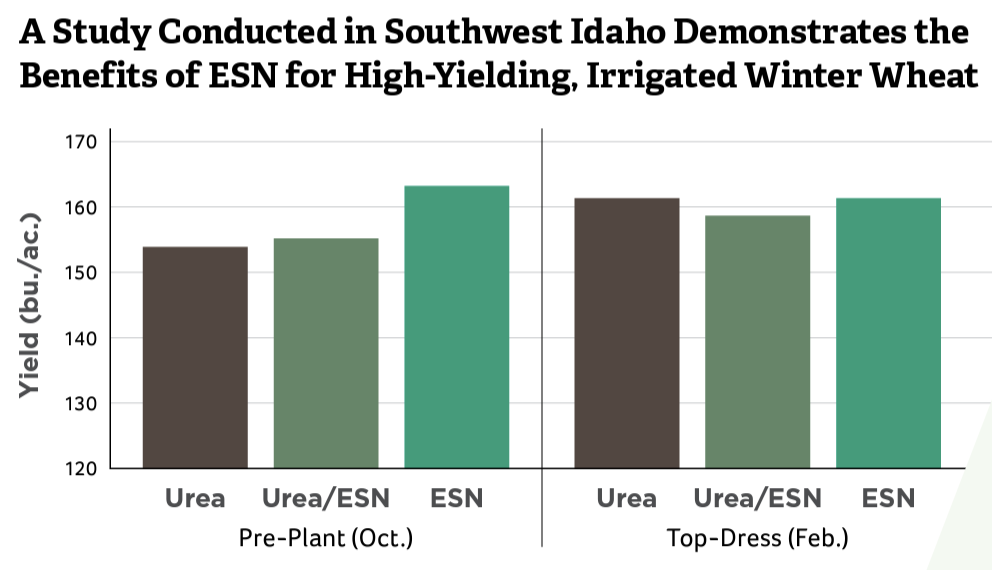
This study conducted in Southwest Idaho demonstrates the benefits of ESN for high-yielding, irrigated winter wheat. One application of ESN at wheat planting can provide all your nitrogen needs and protect your N investment. The result is higher yields, fewer field passes, and improved profitability!
For more information on ESN’s impact on specific crops and geographic regions, search our research database.