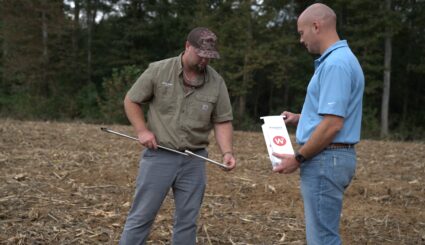
Five Essential Fertilizer Facts

Fertilizer plays an essential role in our soils and in the agriculture industry. It is vital to crop nutrition, quality, profitable production, optimal land use and soil fertility. As you work tirelessly out in the fields, these five fertilizer facts are handy to keep in your back pocket.
1. Fertilizer is vital to crop nutrition.
There are 17 essential nutrients that are critical to the growth of a plant. Fertilizers provide your crops with access to these vital nutrients, including nitrogen, potassium, phosphorus and sulfur. While each nutrient plays a unique role in your soil and crops, they are all critical to proper crop nutrition and plant processes, including photosynthesis, energy transfer and nutrient uptake. Fertilizer allows you to supply your crops with the proper amount of nutrients each season.
Click on the ESN articles below to learn more about crop nutrition:
The Impact of Drought on Crop Nutrition
2. Fertilizer is vital to the quality of your crops.
When soils are deficient in one or more nutrients, you sacrifice potential yield and crop quality. When your crops can access the nutrients they need, when they need them, in the place they need them, the quality of your crop can drastically improve. Adequate nutrition, provided by fertilizer, leads to a greater yield and a better quality crop by replenishing the nutrients in your soil.
For further reading on crop quality, visit these ESN resources:
Manage Nutrients AND High Fertilizer Prices
See the Difference, Right in the Field
3. Fertilizer is essential to profitable production.
As mentioned above, proper crop nutrition leads to higher quality and yield. This leads to increased market value for crops and increased profitability for farmers. When farmers invest in nutrient management and the health of their soil, they see a greater return on their crops.
To find more information on how fertilizer can increase profitability, visit these ESN resources:
Calculating ROI on Fertilizer Applications
5 ROI Killers for Nitrogen – and How To Beat Them
4. Fertilizer is critical to the optimal use of our land.
As fertilizers allow our crops to take up nutrients more efficiently from the soil, it gives farmers the opportunity to produce more crops on less land. Rather than expanding their farmland to meet rising food demands, farmers can grow more food on their existing farmland as fertilizer improves crop nutrition and increases yields.
To learn more about optimal land use and efficient nutrient uptake, visit the following ESN resource:
Enhanced Efficiency Fertilizers: What Are They & How Do They Work?
ESN Technology Helps Reduce Nitrogen Loss
5. Fertilizer is vital to the fertility of your soil.
Soil fertility is based on how rich the nutrients are in your soil. As farmers grow crops year after year, nutrients are used by the plants and removed from the soil. The goal of fertilizer is to help replace these nutrients for greater soil fertility and proper crop nutrition. Fertilizers allow farmers to sustain productivity on the same land, and in the same soil, for longer periods of time.
To learn more about soil fertility, visit these ESN resources:
Building a Soil Nutrient Bank To Maximize Yield Potential
Micros Transformation in the Soil
Soil and Nitrogen Management With Dr. Alan Blaylock
Fertilizer plays a vital role in crop nutrition, quality, profitable production, optimal land use and soil fertility. Without it, it is estimated that food production would be half what it is today.
Interested in learning more about how you can better manage your farm with fertilizer? Reach out to an ESN rep today.
Sources:
Missouri Botanical Garden. (2024). Soil Fertility and Fertilizers.
Soil Fertility and Fertilizers42.pdf (missouribotanicalgarden.org)
Government of Manitoba. (2013). Effects of Manure and Fertilizer on Soil Fertility and Soil Quality. effects-of-manure -fertilizer-on soil fertility-quality.pdf (gov.mb.ca)
Moore, A., & Qin, R. (2024). Fertilization and Soil Fertility. Oregon State University.
Fertilization and Soil Fertility | Forage Information System | Oregon State University
Roberts, T. L. (1999). The Role of Fertilizer in Growing the World’s Food. Top Crop Manager. https://www.topcropmanager.com/the-role-of-fertilizer-in-growing-the-worlds-food-10387/#:~:text=Without%20fertilizer%2C%20the%20world%20would,in%20the%20world’s%20food%20security